
Kidney stones

Kidney stone care, without the guesswork.

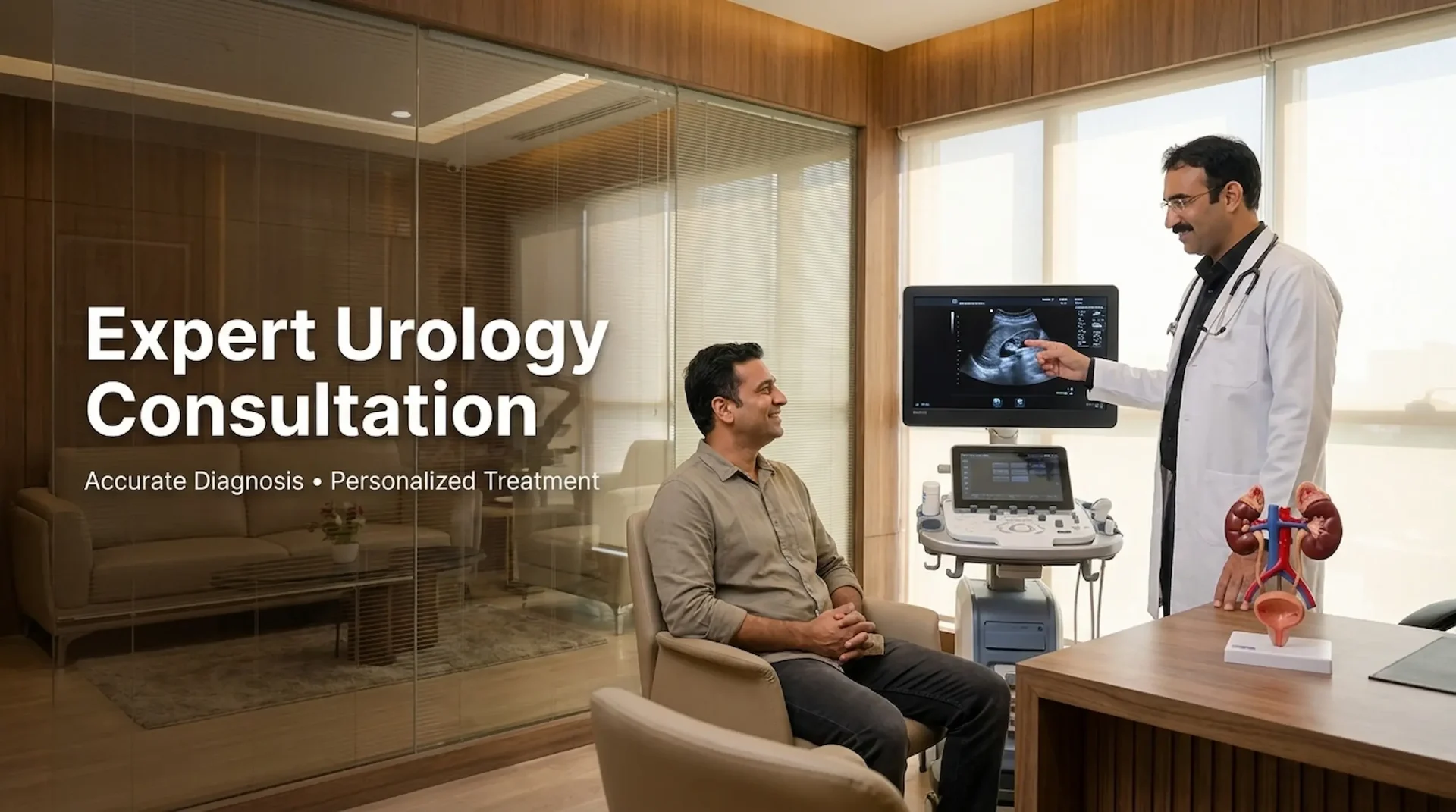
From the first ultrasound to the last follow-up, Dr. Baloch offers the full pathway of stone care — including holmium-laser RIRS, mini-PCNL and prevention planning.
PMDC Registered
Neurospinal and Cancer Care Institute (NCCI)
Consultation
Mon – Sat, Evenings
Introduction

What is a kidney stone and why do they form?

Kidney stones are hard mineral deposits that form when the urine becomes concentrated. Karachi’s hot climate, low fluid intake and dietary factors make stones especially common here — but nearly every stone is treatable when addressed early.
  • Calcium oxalate stones are the most common type
  • Uric acid stones can respond to medical dissolution
  • Struvite (infection) stones require urgent surgery
  • 50%+ of untreated patients form another stone within 5 years
Causes

What causes kidney stones

Stones form when specific minerals become too concentrated in the urine. Several everyday factors tip the balance.

Cause 01

Dehydration

The single biggest driver in hot climates — low urine output concentrates minerals.
Cause 02

High-salt & high-protein diet

Excess sodium and animal protein increase urinary calcium and uric acid.

Cause 03

Family history

A first-degree relative with stones doubles your lifetime risk.

Cause 04

Metabolic conditions

Gout, obesity, diabetes and hyperparathyroidism all raise stone risk.

Cause 05

Recurrent UTIs

Certain bacteria create the alkaline environment that favours struvite stones.

Cause 06

Certain medications

Some diuretics, antacids and supplements can promote stone formation.

Symptoms to watch

When to see a urologist

Any one of the following symptoms is worth a consultation — especially if it has been ongoing for more than a few weeks.

!Sudden severe pain in the flank or groin
!Blood in the urine (visible or on tests)
!Nausea and vomiting during pain episodes
!Burning or difficulty passing urine
!Frequent urinary tract infections
Diagnosis

How the diagnosis is made

A stone can usually be confirmed within the first visit. We keep imaging simple, safe and decisive.

  1. 1

    Detailed history & examination

    Pain pattern, hydration, diet and family history guide the initial impression.

  2. 2

    Urinalysis & blood tests

    Checks for infection, kidney function, calcium, uric acid and electrolytes.

  3. 3

    Ultrasound KUB

    Radiation-free first-line imaging — excellent for kidney stones and obstruction.

  4. 4

    Non-contrast CT (when needed)

    The gold standard for stone size, location and density before surgery.

  5. 5

    Stone analysis

    Every passed or removed stone is analysed to guide prevention.

Why patients choose us

A modern approach, delivered with warmth

💧

Medical therapy

For small stones — increased fluids, α-blockers and monitoring.

ESWL

External shock waves for suitable smaller stones (< 10 mm).

🔬

RIRS + Holmium laser

Flexible ureteroscope up the ureter — no external cut.

🎯

Mini-PCNL

Keyhole surgery for larger and staghorn stones.

Prevention & lifestyle

What you can do every day

Once you've had a stone, prevention becomes the real work. A few sustained habits cut recurrence dramatically.

  • Drink 2.5–3 litres of water daily — enough to keep urine pale
  • Reduce dietary salt to under 5 grams per day
  • Moderate animal protein; keep normal dietary calcium
  • Cut back on oxalate-rich foods only if oxalate stones are confirmed
  • Add citrus fruits (lemon, orange) — natural citrate protects against stones
  • Follow-up ultrasound every 12 months after the first stone
  • Inside the practice

    A day at the clinic

    Real moments from consultations, imaging, surgery and follow-up — the standard of care patients can expect.

    Patient consultation
    Patient consultation
    Patient consultation
    Patient consultation
    Patient consultation
    Patient consultation
    Frequently asked

    Questions patients often ask

    The procedure itself is done under anaesthesia. Most patients feel only mild discomfort afterwards, largely from the temporary stent, which is removed 1–2 weeks later.
    RIRS is typically a same-day discharge. Mini-PCNL usually requires one overnight stay. Most patients are back at desk work within 3–5 days.
    Recurrence is common but preventable. After the stone is analysed, we build a personalised prevention plan — hydration targets, dietary adjustments and medical therapy where needed.
    Book a consultation

    Ready to talk it through?

    A single consultation usually clarifies the diagnosis and the treatment path. Book yours today, or contact the doctor for a quick question.

    SB
    Dr. Shahid H. Baloch
    Consultant Urologist & Sexologist in Karachi — providing modern, evidence-based urological care with a focus on kidney stones, prostate disease, male infertility and men’s sexual health.

    Clinic Timings

    Neurospinal and Cancer Care Institute (NCCI)
    Saddar, Karachi, Pakistan
    • Monday – Friday5:00 PM – 9:00 PM
    • Saturday4:00 PM – 8:00 PM
    • SundayBy appointment

    © 2026 Dr. Shahid Hussain Baloch. All rights reserved.

    Consultant Urologist & Sexologist · Karachi, Pakistan

    Scroll to Top